
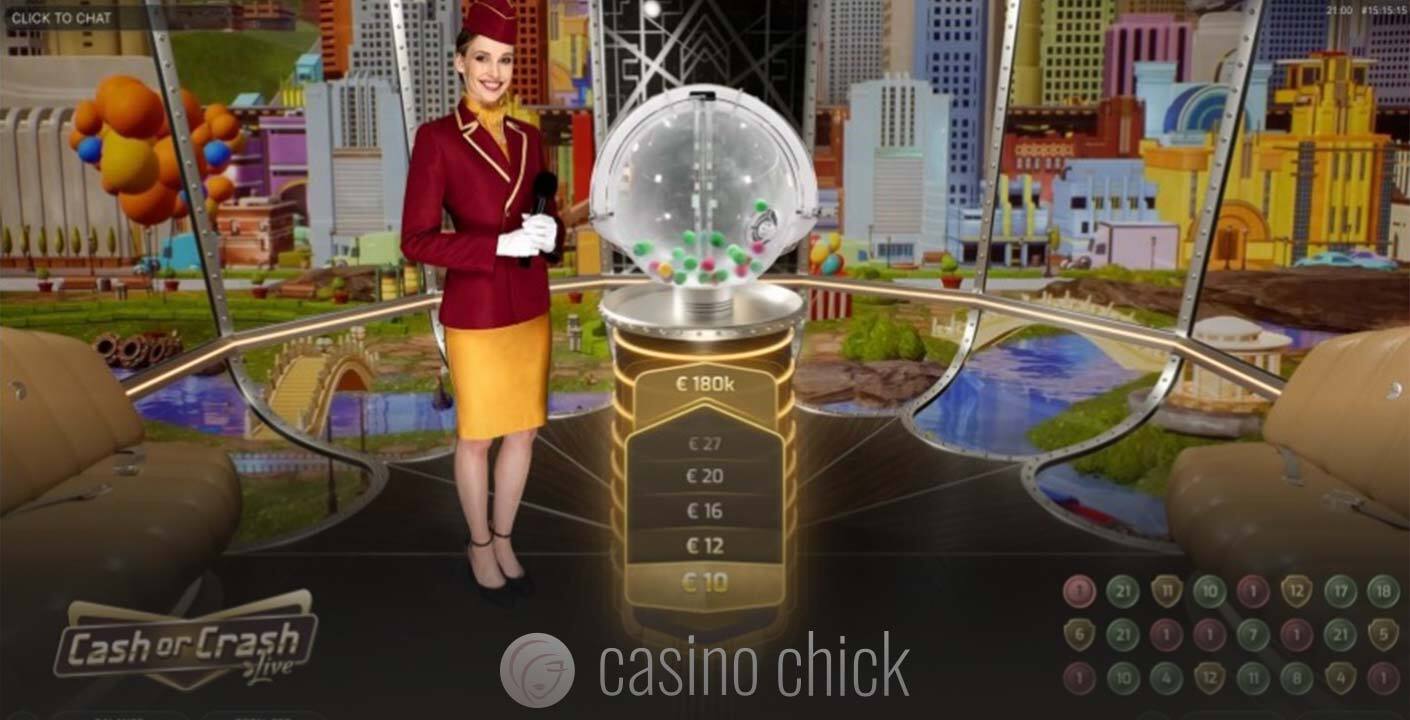
Cash or Crash Live carves out its own territory in the realm of live game shows https://cashorcrashcasino.com. Its magic lies in a powerful blend of visual spectacle and game mechanics that makes each round a personal challenge of nerve. This isn’t a mere spin of a wheel of chance. Here, you are in control, making active choices that influence your payout. The concept captivates you with a climbing multiplier, then urges you to cash out before a hidden «crash» resets everything. To maximize your experience, you should see beyond the flashy show and understand its actual mechanics. Let’s analyze the stages, the presenter’s part, the mathematics of risk, and what players can realistically do to steer through the excitement.
Tactical Approaches and Player Psychology
No approach can beat the core randomness. But you can apply systematic techniques to handle your money and your mental state. The key trade-off is a exchange. Do you secure fixed returns, or aim for exponential growth? Gamblers often adopt techniques like the «Fixed Cash-Out.» Here, you decide ahead of time to withdraw at a specific multiplier, say 2x, in every round. This seeks consistent, small gains. The contrary is the «Let It Ride» method, where you risk several rounds for a opportunity for a monster payout, accepting that losses will take place. A more measured tactic is the «Percentage Bankroll» method, where you adjust your wager amount based on your present profits. The most important element, though, is in your mind. Can you overcome the «greed factor» when the multiplier soars? Can you escape frustration after an early crash? Your most powerful tool is establishing clear boundaries for yourself before the game even begins.
Common Pitfalls to Evade
Watch out for a few classic mistakes. The most destructive is «chasing» a crash. This involves impulsively increasing your bet after a defeat, which violates the game’s stage-independent design. Another error is believing in the «hot hand» misconception, assuming a sequence of large ratios is probable to continue. Letting the commentator’s talk or the behavior of other participants divert you from your own established approach is common. Also, don’t misread the areas. The Amber and Red Zones are not tests to overcome. They are warnings that the hazard has jumped. Starting any stage without a clear goal turns the game from a process of judgment into a pure emotional rollercoaster. That journey seldom finishes well.
Statistical Foundations and Risk
Let’s look at the data that power the game. The multiplier for each stage is derived from a defined probability model. Frequent, small multipliers such as 1.2x or 1.5x have a high chance of being selected. Very large multipliers are possible, but they are exponentially more improbable. This model maintains the game stable. The common, minor crashes finance the infrequent, massive possible wins. The RTP figure is a statistical percentage over millions of games. In your single session, the swings are wild. You’re not wagering against the house in a conventional sense. You’re acting against a hidden, random number. Remember these points:
- Separate Rounds: Each level’s crash value is a separate event. A crash of 1.2x in round one gives no info about round two.
- No Forecasting Ability: The RNG rules out any predictable sequences. Historical crashes or big wins do not influence what comes next.
- House Advantage: The game is designed with an inherent house edge, which is shown in the publicly disclosed RTP from the provider.
The Core Objective and Fundamental Process
The aim of Cash or Crash Live is easy on the surface. You must determine when to withdraw a increasing multiplier before a secret «crash point» terminates the game and claims your winnings for that level. Every game starts with players putting bets. A rocket then starts its ascent, and a multiplier commences increasing from 1x. The ride has multiple stages. Prior to launch, a random crash multiplier is determined for every stage, secret from everyone. As the value increases, every player opts to hit «Cash Out,» fixing that multiplier on their bet, or to stay on board. If the rocket triggers the hidden crash point before a player exits, they lose their wager for that stage. The pattern of hazard and profit occurs over multiple rounds. Surviving players build their earnings gradually.
Deconstructing the Game Phases
Think of the game as a series of distinct chapters, each a new gamble. Surviving a crash doesn’t knock you out. You move to the subsequent stage with your collected winnings safe, then commence the risk cycle anew on the next leg of the rocket’s journey. This framework is critical. It builds a narrative, with suspense that builds as you go. The presenter amplifies the drama, calling out how many players are still aboard the rocket as the multiplier achieves scary heights. First rounds often involve conservative plays. Later stages, with their high-stakes multipliers, tempt you to gamble the profit you’ve already banked. This segmentation is the heart of the game’s drama. It demands a string of individual, critical decisions instead of a single one.
From Green to Red: The Escalating Risk
Observe the colorful route the rocket travels. It’s a fundamental part of the game’s visual lexicon. The initial section is typically a «Green Zone,» a lower-risk phase where a crash is still possible. Afterward, the rocket could move into an «Amber Zone,» a distinct indication that risk is rising. The concluding section is the «Red Zone.» Here, multipliers appear their most attractive, but the probability of a crash is mathematically at its highest. Those hues are more than decoration. They offer a immediate indicator for the degree of risk at any given time. They make an intangible probability become real. Realizing the game is deliberately warning you about growing volatility is a critical piece of tactical knowledge.
The function of the on-air host and RNG
The live host is more than just talk. They establish the game’s emotional pace. While they cannot influence the result, they masterfully build suspense. They announce the climbing multiplier and provide live updates on what percentage of the crowd is cashing out at each level. That social cue can play tricks on your head. But remember, the host works separately from the game’s engine: the Random Number Generator (RNG). The crash point for each stage is set by a certified RNG the instant the stage begins. This guarantees fairness and total unpredictability. The host has no clue when the crash will happen. Their job is entertainment. The RNG’s job is certifiable fairness. This combination combines transparent live action with provably random results.
Summary: A Blend of Luck and Choice
Cash or Crash Live is a captivating combination of absolute chance and intentional decision. Its workings are designed to weave a story of rising stakes, driven by a transparent RNG and brought to life by a charismatic presenter. Defining success as a fun and possibly lucrative game relies on several factors. It’s not so much about forecasting the unpredictable and rather about grasping how the game is designed. It requires controlling your money with discipline and managing the mental inclinations the game expertly stimulates. By learning its levels, acknowledging its numeric basis, and sticking to a individual plan, you can transform your experience. You move from bewildered uncertainty to enlightened involvement in a remarkably thrilling live game show.